April 16, 2026
Strategic AI Prompts for Video Marketing Campaigns That Convert
Your AI video tool is only as good as the prompt you give it. The frameworks top brands use to generate scroll-stopping creative.
Your AI video tool is only as good as the prompt you give it. The same tool produces totally different results depending on how you ask. Here is what separates generic output from scroll-stopping creative.
The Three Pillars of Strategic Video Prompts
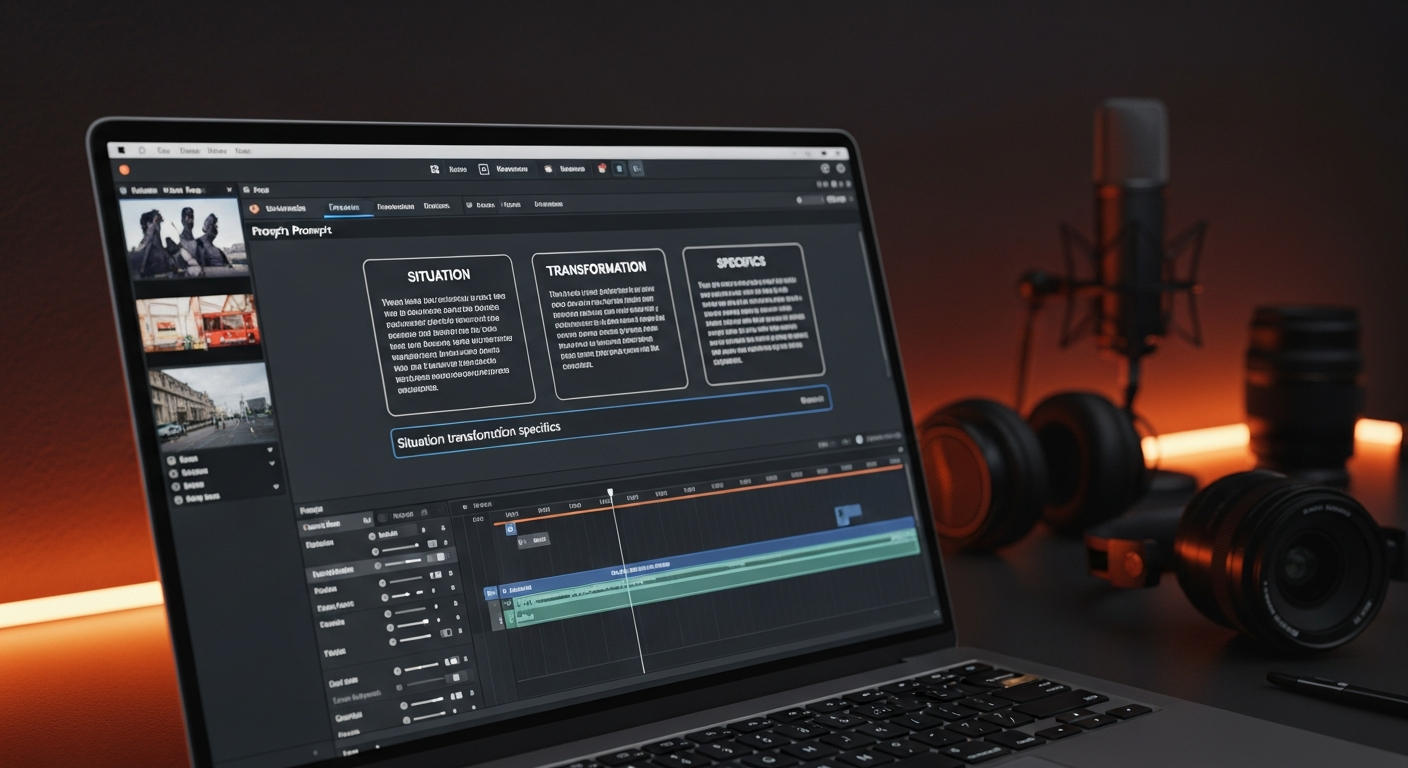
Every high-converting AI video prompt has three elements. Leave any one out and your results suffer.
1. The Situation — Paint the scene. Where is this video playing? Who is watching? What are they doing? A tired parent browsing TikTok at 10pm after putting kids to bed gives you very different creative than a millennial on their commute scrolling Instagram.
2. The Transformation — What changes by the end? The best video prompts describe a before-and-after. Not just show our product. Show the moment something shifts. The relief. The confidence. The laugh. Define it explicitly.
3. The Specifics — Colors, lighting, camera angles, pacing. Generic prompts get generic output. You have to paint the picture. Cinematic close-up with warm tungsten light versus wide shot, cold fluorescent office. Two different videos.
Prompt Templates That Actually Convert
Here are the frameworks top-performing brands use:
The Problem-Solution Loop
Show a specific person who struggles with pain point. They discover product. Now they experience transformed state. Emotional shift visible on their face. Style: authentic handheld, golden hour light, 2-second hold on reaction.
The Before-After Parallel
Split screen. Left side: exact description of current state. Right side: exact description of desired state. Transition in 0.5s. No music, ambient street sound. Shot on iPhone-style camera.
The Origin Story
Close-up on hands doing specific action. Voiceover starts. Voice description: age, accent, tone. Cut to product reveal. Brand color lighting pop. Style: editorial, 4:5 vertical.
What Makes Prompts Fall Flat
Common mistakes that kill conversion before recording starts:
- Too vague: make it exciting — exciting to who, doing what?
- Missing the viewer: Not defining who watches changes what gets shown
- No emotion specified: AI reads your prompt literally. Say what you want people to feel.
- Ignoring constraints: Platform matters. TikTok needs different prompts than YouTube pre-roll.
When Prompts Need Help
Prompt engineering gets you 80% of the way there. But some campaigns need more. When you need volume, variety, and guaranteed quality, human review catches what prompts miss.
A/B testing dozens of prompt variations finds winners. Frame-by-frame control catches awkward transitions. Both take time you may not have.
Need help with video creative? AdMeow combines AI speed with human review to deliver high-performing ad videos in 48 hours.
Book a campaign → AdMeowFrequently Asked Questions
How long should my video prompt be?
Specific enough to guide the AI, not so long it confuses it. 50-150 words usually hits the sweet spot. Include the three pillars (situation, transformation, specifics) and cut the rest.
Can AI generate multiple video versions from one prompt?
Yes. Most tools generate 3-5 variations from a single well-crafted prompt. This is where prompt engineering really pays off—write once, test multiple angles. Iterate the prompt based on results.
What is the most important element in a video prompt?
The emotional shift. Define how the viewer feels by the end. Satisfied, relieved, excited—be specific. AI renders emotions through facial expressions, lighting, and pacing. Tell it what emotion to show.
Should I mention my brand in every video?
For top-of-funnel awareness, not always. For consideration and conversion, yes. The clearest formula: hook without brand, value prop with brand, call-to-action with brand. Three beats, brand hits once or twice.